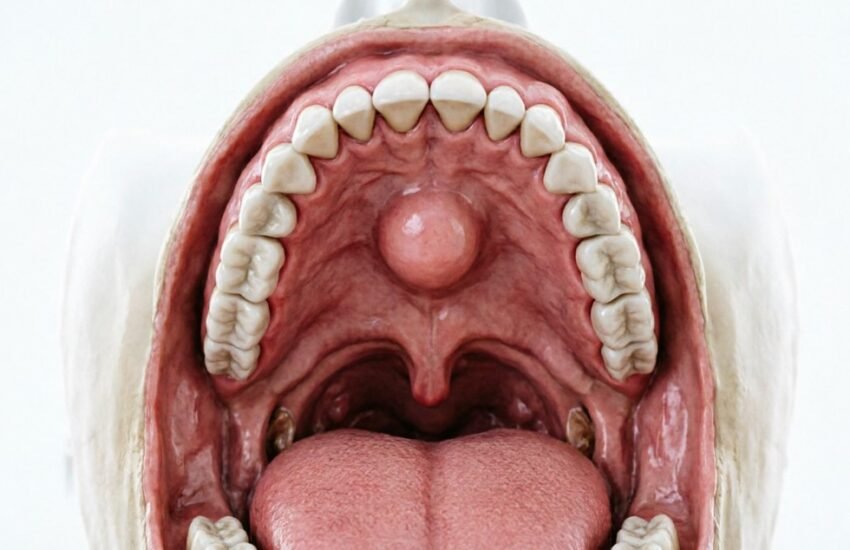
You are eating a hot slice of pizza and suddenly feel pain. You might notice a bump in the roof of my mouth while running your tongue across the palate. This strange lump can cause worry. Most causes are highly treatable and go away without any medical intervention.
Key Takeaways
✓ Most lumps on the palate are harmless and go away on their own.
✓ Burns from hot food are the most frequent cause of temporary swelling.
✓ Torus palatinus is a benign bone growth affecting millions of people.
✓ Persistent lumps lasting over two weeks require professional dental evaluation.
✓ Oral cysts and canker sores often resolve with simple home care routines.
What Causes a bump in the roof of my mouth?
Let’s be honest, finding a lump up there is scary. The truth is, most lumps are completely harmless. Thermal burns are the most common culprit. You bite into a molten cheese stick and burn your palate. The tissue swells up to protect itself. Another frequent cause is torus palatinus. This is a benign bone growth. It sits right in the middle of your hard palate (it usually grows very slowly). You might just notice it suddenly after years of eating normally.
Thermal Burns and Irritation
Hot foods and drinks damage the delicate skin inside your mouth. If you burn your palate on hot food, the tissue swells up quickly to protect the underlying nerves from further damage. This creates a temporary lump. You can also get burns from spicy foods. The capsaicin irritates the tissue and causes mild inflammation.
Torus Palatinus (Bone Growth)
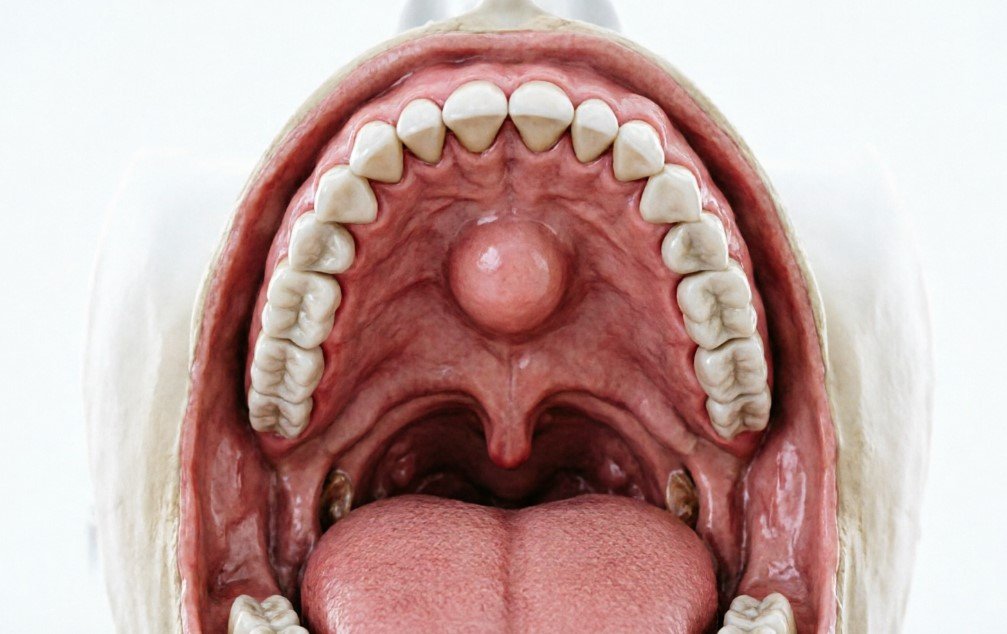
Torus palatinus is a benign bone growth that sits right in the middle of your hard palate and usually grows very slowly over many years. It affects millions of people worldwide. Doctors don’t know the exact cause, but genetics play a big part. It’s completely safe and doesn’t turn into cancer. You only need to worry if it gets so large that it interferes with eating.
Common Oral Cysts and Sores
Sometimes, blocked salivary glands cause problems. A mucocele forms when a duct gets damaged. Have you ever popped a tiny blister on your lip? These fluid-filled sacs feel smooth and painless. They often appear after you accidentally bite the inside of your cheek (like when you accidentally bite your cheek while sleeping). Canker sores are another annoyance. They start as small red bumps before turning into open ulcers. They hurt a lot when you eat spicy food.
Mucocele and Salivary Gland Issues
Your mouth has hundreds of minor salivary glands. When a gland gets blocked or injured, saliva pools under the skin. This creates a soft, painless lump. Most mucoceles disappear on their own within a few weeks. Larger ones might need a minor procedure to drain the fluid.
Canker Sores and Cold Sores
Canker sores are small, shallow lesions that develop on the soft tissues in your mouth. They have a white or yellow center and a red border. Stress and acidic foods often trigger them. Cold sores are different. They are caused by a virus and usually appear on the outside of the lips. The Mayo Clinic notes that canker sores are not contagious.
|
Condition
|
Prevalence in US Adults (2025)
|
Typical Healing Time
|
|---|---|---|
|
Thermal Burns
|
45%
|
3 to 7 days
|
|
Torus Palatinus
|
20% to 30%
|
Permanent (benign)
|
|
Mucoceles
|
2.4%
|
30 to 60 days
|
|
Canker Sores
|
20% annually
|
7 to 14 days
|
When to See a Dentist
Here’s the thing, you shouldn’t ignore persistent lumps. Most minor injuries heal quickly. But some signs mean you need professional help. A lump that bleeds when you brush your teeth is a major warning sign. You should also pay attention to changes in size or color.
Warning Signs of Oral Cancer
Oral cancer can sometimes start as a small lump. The American Cancer Society notes that early detection saves lives. Look out for patches that are red or white. These patches might feel rough to the touch.
- The lump grows larger after two weeks.
- You experience unexplained bleeding.
- The area feels completely numb.
- You have trouble swallowing food.
- The lump is hard and fixed in place.
“Most palatal lumps are benign tori or minor trauma, but any lesion persisting beyond 14 days warrants a biopsy to rule out malignancy.” – Dr. Sarah Jenkins, Oral Pathologist, American Dental Association, 2025.
Infections and Abscesses
An infected tooth can cause a bump on the palate. This is called a dental abscess. It happens when bacteria enter the pulp of the tooth. The infection spreads to the root tip and forms a pocket of pus. You will feel a throbbing pain that keeps you awake at night.
Home Care and Treatment Options
You can manage minor burns at home. Rinsing with cool water helps immediately. Saltwater rinses reduce swelling later (mix half a teaspoon of salt in warm water). Avoid hot and spicy foods for a few days.
- Apply a cold compress to your outer cheek.
- Rinse with a mild saltwater solution.
- Avoid acidic fruits like oranges.
- Stay hydrated with cool water.
- Use over-the-counter oral numbing gels.
- Crunchy tortilla chips.
- Spicy jalapeno peppers.
- Hot coffee or tea.
- Acidic citrus fruits.
|
Treatment Type
|
Best For
|
Average Cost (2026)
|
Success Rate
|
|---|---|---|---|
|
Observation
|
Torus palatinus
|
$0
|
100%
|
|
Saltwater Rinse
|
Minor burns
|
$5
|
95%
|
|
Surgical Removal
|
Obstructive tori
|
$300 to $800
|
98%
|
|
Corticosteroids
|
Severe canker sores
|
$20 to $50
|
90%
|
“Patients often panic about oral cancer, but statistics show that over 80 percent of palatal bumps are completely harmless.” – Dr. Michael Chen, Oral Surgeon, Mayo Clinic Proceedings, 2026.
Safe Home Remedies
Keeping the area clean is very important. Bacteria can make minor injuries worse. Brush your teeth gently with a soft-bristled brush. Avoid toothpaste that contains sodium lauryl sulfate. This ingredient can irritate existing sores. The National Institute of Dental and Craniofacial Research recommends gentle oral hygiene practices.
Professional Medical Treatments
A dentist can remove large bone growths. They can also drain painful abscesses. Laser therapy is a newer option for stubborn sores. It reduces pain and speeds up the healing process.
- Incision and drainage for abscesses.
- Surgical removal of large tori.
- Biopsy for suspicious lesions.
- Laser therapy for stubborn sores.
Can a bump in the roof of my mouth be cancer?
Most lumps are not cancer. Oral cancer usually looks like a persistent ulcer. See a doctor if it doesn’t heal in two weeks.
How do I get rid of a burn on my palate?
Cool the area with ice water. Avoid hot foods for a few days. The skin heals very quickly on its own.
Is torus palatinus dangerous?
No, this bone growth is completely benign. It only needs removal if it interferes with eating or dentures.
Why does my bump hurt when I eat?
Inflammation makes the tissue sensitive. Spicy or crunchy foods irritate the swollen area further.
Can stress cause a bump in the roof of my mouth?
Yes, stress weakens your immune system. This makes you more prone to canker sores and cold sores.
Should I pop a blister on my palate?
Never pop oral blisters. This introduces bacteria and increases your risk of a painful infection. Schedule a dental visit if your symptoms linger for more than fourteen days. Keep up with your daily oral hygiene routine to prevent future infections. Your dentist can provide peace of mind and the right treatment plan.