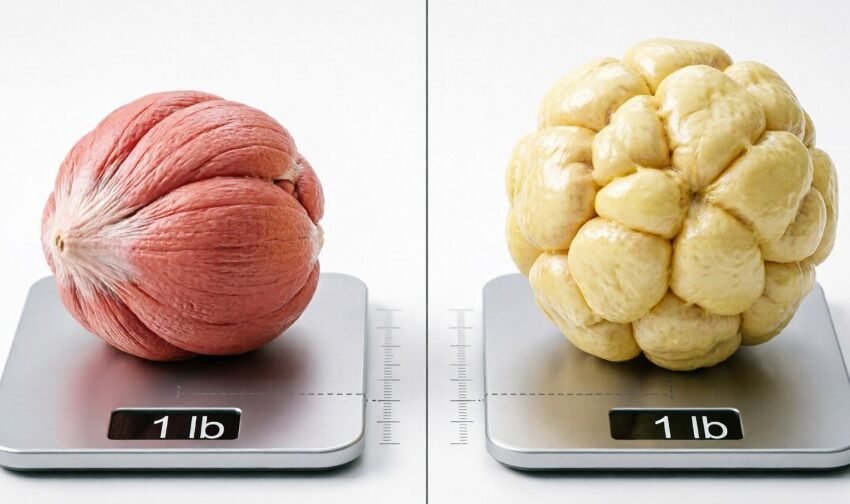
You have probably heard that a pound of muscle versus a pound of fat weighs the same. This fact confuses many people who start their fitness journey. While the scale shows identical numbers, these two tissues behave completely differently inside your body. Understanding this distinction changes how you track progress and set realistic health goals.
Key Takeaways
✓ A pound of muscle and a pound of fat both weigh exactly 16 ounces on any scale
✓ Muscle tissue takes up roughly 15-20% less space than fat tissue of equal weight
✓ Muscle burns more calories at rest compared to fat tissue
✓ Body composition matters far more than total weight for health outcomes
✓ You can gain muscle while losing fat, keeping scale weight stable
The Weight Myth That Confuses Everyone
Let’s be honest here. Most people think muscle weighs more than fat. This misconception creates frustration when the scale does not move despite working out regularly. The truth is simple: weight is weight. A pound remains a pound whether it comes from muscle, fat, feathers, or lead.
What actually differs is density. Muscle tissue packs more tightly than fat tissue. Picture holding a pound of bricks versus a pound of cotton balls. Both weigh the same, but the cotton takes up much more room. Your body works the same way.
Why the Scale Lies About Progress
When you begin strength training, something interesting happens. You might lose fat while gaining muscle simultaneously. The scale stays stubborn because these changes cancel each other out numerically. This frustrates people who only track weight.
Body composition tells the real story. Someone weighing 150 pounds with 25% body fat looks completely different from someone at 150 pounds with 15% body fat. The person with less fat and more muscle appears leaner, healthier, and more fit despite identical scale readings.
The Density Difference Explained
Muscle tissue has a density of approximately 1.06 g/ml, while fat tissue sits around 0.9 g/ml. This 15-20% density gap means muscle occupies less volume. One pound of muscle might fit in your palm, while a pound of fat spreads across both hands.
This physical difference affects how clothes fit and how you look in the mirror. You could maintain the same weight for months while dramatically changing your appearance through body recomposition.
A Pound of Muscle Versus a Pound of Fat: Metabolic Impact
The metabolic differences between these tissues create major implications for weight management. Muscle tissue actively burns calories even when you sit still. Fat tissue, particularly subcutaneous fat, remains relatively metabolically inactive.
Research from 2025 shows that each pound of muscle burns approximately 6-10 calories daily at rest. Meanwhile, a pound of fat burns only 2-3 calories. This gap widens significantly when you consider activity levels.
Calorie Burning at Rest
Your basal metabolic rate (BMR) represents calories burned just to keep you alive. Muscle mass directly influences this number. More muscle means higher BMR, which translates to eating more food without gaining weight.
Consider two people weighing 180 pounds. Person A has 30% body fat while Person B has 15% body fat. Person B likely burns 200-400 more calories daily despite identical weight. Over a year, this difference could mean 20-40 pounds of fat prevention without changing food intake.
Activity and Energy Expenditure
Muscle tissue shines during movement. Building lean mass improves your ability to perform exercises, which burns additional calories. You create a positive cycle: more muscle enables harder workouts, which builds more muscle.
Fat tissue does not contribute to movement capacity. Excess fat actually makes exercise harder, creating a negative cycle that traps many people. Breaking this cycle requires focusing on body composition rather than weight alone.
Visual and Physical Differences
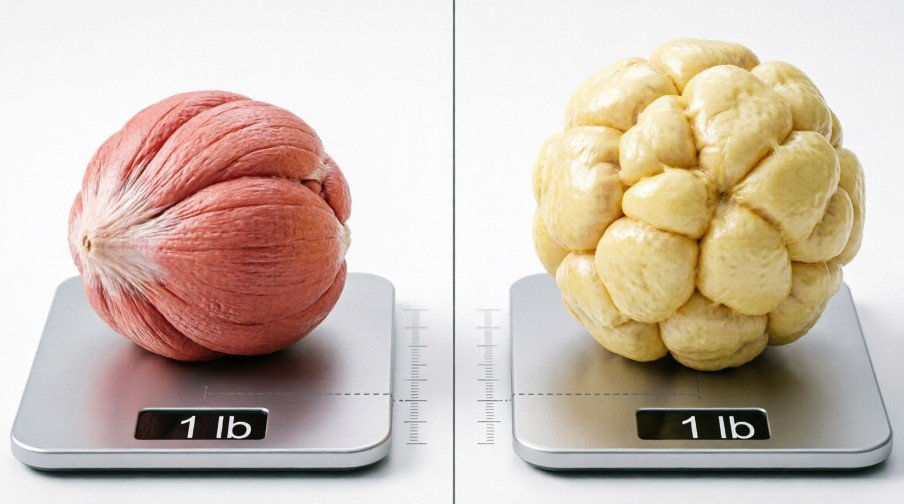
The appearance gap between muscle and fat shocks people who see side-by-side comparisons. One pound of each tissue looks nothing alike.
Fat appears soft, jiggly, and spreads easily. It lacks defined structure and hangs loosely. Muscle looks firm, compact, and structured. It creates shape and definition in your physique.
Space and Volume Comparison
| Tissue Type | Weight | Approximate Volume | Visual Size |
|---|---|---|---|
| Muscle | 1 pound | 0.5 liters | Grapefruit-sized |
| Fat | 1 pound | 0.6-0.7 liters | Small melon-sized |
This table shows why someone can “lose inches but not pounds.” Replacing fat with muscle shrinks your measurements while maintaining weight.
How Clothes Fit Differently
Your jeans tell a better story than your scale. Muscle creates curves and fills out clothing in flattering ways. Fat tends to spill over waistbands and create bulges.
People often report dropping two clothing sizes while maintaining identical weight. This happens because muscle takes up less room, allowing clothes to fit looser despite unchanged numbers.
Health Implications Beyond Appearance
The health differences between muscle and fat extend far beyond looks. Medical research in 2025-2026 continues revealing how body composition affects disease risk, longevity, and quality of life.
Disease Risk Factors
Excess body fat, especially visceral fat around organs, increases risks for:
- Type 2 diabetes
- Heart disease
- High blood pressure
- Certain cancers
- Sleep apnea
Muscle tissue provides protective benefits. Higher muscle mass correlates with:
- Better insulin sensitivity
- Stronger bones
- Improved immune function
- Lower inflammation markers
- Better balance and fall prevention in older adults
Longevity and Quality of Life
Studies show that muscle mass becomes increasingly important as you age. After age 30, people naturally lose 3-5% of muscle per decade without intervention. This condition, called sarcopenia, leads to weakness, frailty, and loss of independence.
Maintaining muscle through resistance training preserves function well into older age. People with higher muscle-to-fat ratios live longer, healthier lives regardless of total body weight.
Measuring What Actually Matters
If scale weight misleads you, what should you track instead? Several methods provide clearer pictures of body composition changes.
Modern Tracking Methods
| Method | Accuracy | Cost | Accessibility |
|---|---|---|---|
| DEXA Scan | Very High | $50-150 per scan | Limited |
| Bod Pod | High | $30-75 per test | Moderate |
| Bioelectrical Impedance | Moderate | $30-300 device | High |
| Skinfold Calipers | Moderate-High | $10-50 tool | High |
| Progress Photos | Subjective | Free | Very High |
These tools reveal changes that scales miss. A DEXA scan precisely measures fat mass, lean mass, and bone density. Bioelectrical impedance scales estimate body fat percentage at home.
Simple Home Tracking
You do not need expensive equipment to track progress effectively. Combine these methods:
- Weekly progress photos in consistent lighting
- Monthly body measurements (waist, hips, chest, arms, thighs)
- How clothes fit
- Strength gains in the gym
- Energy levels and performance
These indicators provide richer feedback than a single number on a scale.
Common Questions About Body Composition
Does a pound of muscle versus a pound of fat weigh differently on the scale?
No, they weigh exactly the same. One pound equals 16 ounces regardless of tissue type. The confusion stems from volume differences, not weight differences. Muscle simply occupies less space than fat.
Can you gain muscle and lose fat at the same time?
Yes, especially if you are new to strength training or returning after a break. This process, called body recomposition, requires adequate protein intake, resistance training, and slight calorie control. Experienced athletes find this harder but still achievable.
How long does it take to replace fat with muscle?
Realistic expectations matter here. Beginners might gain 1-2 pounds of muscle monthly while losing fat. Advanced lifters progress slower, perhaps 0.5-1 pound monthly. Fat loss can occur faster, typically 1-2 pounds weekly with proper diet.
Why does my weight stay the same but I look different?
This indicates successful body recomposition. You are losing fat while gaining muscle simultaneously. Since muscle is denser, you shrink in size while maintaining weight. This represents ideal progress for most people seeking better health and appearance.
Should I focus on losing weight or gaining muscle?
For most people, focusing on body composition beats chasing weight loss. Build muscle through strength training while managing nutrition to reduce fat. The scale might not move dramatically, but your health, appearance, and fitness will improve significantly.
What happens if I only do cardio and no strength training?
Cardio burns calories but does not build significant muscle. Without resistance training, you risk losing muscle along with fat during weight loss. This lowers your metabolic rate and makes weight regain more likely. Combine cardio with strength training for best results.
How much protein do I need to build muscle?
Current 2025 guidelines suggest 0.7-1 gram of protein per pound of body weight for active individuals seeking muscle growth. Someone weighing 150 pounds should aim for 105-150 grams daily. Spread this across 3-5 meals for optimal absorption.
Taking Action Today
Stop letting the scale dictate your self-worth. Focus on building strength, improving performance, and feeling better in your body. Track multiple metrics beyond weight to see real progress.
Start strength training if you have not already. Prioritize protein in your meals. Be patient with the process because body recomposition takes time. Your future self will thank you for investing in muscle health today.
Remember that a pound of muscle versus a pound of fat might weigh the same, but their impact on your health, appearance, and longevity differs dramatically. Choose to build the tissue that serves you best.